
Over the past decade, European fundraising and fund structuring considerations have evolved from a specialized issue into a core operational and regulatory concern for real estate investment managers, as discussed during NAREIM’s Virtual Exchange Series: Implications of AIFMD2.
What was once viewed primarily as a fundraising exercise is now increasingly impacting compliance frameworks, governance structures, reporting obligations, and risk management processes across the industry. Attendees agreed that navigating AIFMD and AIFMD2 now requires significantly greater coordination among legal, compliance, operations, finance, and risk teams as firms continue expanding cross-border fundraising activities.
Audience polling reinforced how widespread these issues have become. While only a small minority considered themselves true experts in AIFMD, 60% of members described themselves as somewhere between a beginner and an expert, with another 30% indicating they “know the basics.”
At the same time, 56% of participants indicated their U.S. or non-European funds are currently raising capital from European investors, while 44% reported operating European-domiciled parallel or feeder vehicles for U.S. funds. Another 44% already manage European-domiciled funds tied to European-focused strategies.
One of the clearest themes from the discussion was that AIFMD should not be viewed solely as a fundraising regulation. Attendees repeatedly emphasized that the directive was originally designed to create a pan-European framework for investor and market protection following the global financial crisis. While firms most often experience the rules through marketing restrictions, investor disclosures, and registration requirements, the broader objective is systemic oversight, providing regulators with greater visibility into fund structures, delegation arrangements, liquidity management, leverage, and operational risk.
Participants emphasized that the practical application of AIFMD continues to vary significantly across jurisdictions, creating operational complexity for firms fundraising across Europe. One attendee described the process as “a maze,” noting that teams often navigate different filing requirements, disclosure standards, and investor engagement rules depending on the country involved.
In response, firms are taking a more disciplined and coordinated approach to market entry and regulatory planning. Legal, compliance, investor relations, and operations teams are increasingly aligning earlier in the fundraising process to evaluate jurisdictional requirements and operational impact.
Areas of focus increasingly include:
- Assessing registration and pre-marketing requirements on a country-by-country basis
- Evaluating the cost and operational burden associated with specific jurisdictions
- Prioritizing target markets before launch rather than pursuing opportunistic fundraising
“Once you lay out everything that needs to happen operationally and financially, the discussion quickly becomes business-led.”
The discussion also highlighted growing scrutiny surrounding reverse solicitation. While attendees acknowledged that it remains an important concept within European fundraising, there was broad recognition that regulators are increasingly skeptical of firms relying on it as a systematic fundraising strategy.
“Reverse solicitation is not a marketing strategy.”
Regulatory Expectations Continue to Expand Beyond Fundraising
Delegation and substance requirements generated some of the most in-depth discussion of the session. Many firms continue operating structures where European management entities oversee funds while investment expertise and operational personnel remain concentrated in the United States. Members acknowledged that regulators are increasingly focused on ensuring these European entities maintain genuine oversight capabilities and operational substance rather than functioning as lightly staffed administrative entities.
The updated framework expands delegation oversight beyond traditional portfolio management activities into additional operational and ancillary functions, including administration, marketing arrangements, and certain investment services. Several attendees noted that this broader interpretation may increase compliance obligations surrounding third-party service providers, placement agents, and outsourced operational functions.
Liquidity management tools under AIFMD2 generated significant discussion among attendees, particularly as participants compared European regulatory priorities with more traditional U.S. fund structures. Several noted that the European framework places greater emphasis on protecting financial stability during periods of market stress, including through tools designed to slow or restrict investor withdrawals when necessary.
Polling results suggested that while many firms are still early in adapting to these provisions, exposure is already growing. One-third of members (33%) indicated they currently manage at least one open-ended European fund, while 11% already operate European loan-originating funds, two categories directly impacted by some of the most notable AIFMD2 changes.
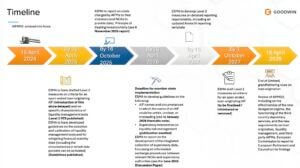
Attendees also highlighted the expanding reporting and oversight obligations associated with the updated framework. New disclosure requirements are expected to require more granular reporting around leverage, delegated functions, portfolio exposures, and marketing jurisdictions, prompting many firms to reassess existing compliance and governance processes.
Attendees also highlighted the expanding reporting and oversight obligations associated with the updated framework. New disclosure requirements are expected to require more granular reporting around leverage, delegated functions, portfolio exposures, and marketing jurisdictions, prompting many firms to reassess existing compliance and governance processes.
To access the full 2026 Virtual Exchange Series: Implications of AIFMD2 takeaways and meeting resources, click here to login to the Info Hub.