
NAREIM's Architecture, Engineering & Development meeting brought industry leaders to Boston to examine how technology, data and technical expertise are changing the way real estate teams evaluate risk, manage assets and plan for the future. From artificial intelligence and due diligence technology to building envelopes, data centers and one of Boston’s largest waterfront developments, the focus kept returning to something more fundamental: making better decisions.

- To view meeting photos, access our Flickr album here.
Technology can give investment managers access to more information, identify risks earlier and automate work that once consumed hours of staff time. What it cannot do is remove the need for judgment.
AI Starts With the Work, Not the Tool
Generative AI offered perhaps the clearest example of that shift. Rather than beginning with a perfect enterprise strategy, firms are experimenting with specific problems, evaluating the results and adjusting the process.
One team began with a mandate to use Copilot and quickly discovered that simply treating AI like a search engine produced limited value.
“At first we were using it like Google. We didn’t know what we were doing.”
The experiments became more sophisticated from there.
One involved comparing large volumes of executed development agreements to identify differences in terms and connect past deal experience with future negotiations. When Copilot struggled with the document volume, another platform was used for the large-scale analysis before the output was returned to Copilot for synthesis.
The findings are now being tested against the experience of acquisitions and asset management teams before informing future documents and processes.
Other pilots focused on replacement-cost updates and technical due diligence. Not every experiment succeeded. Poorly structured source information initially produced inaccurate results in one case, while copyright restrictions ultimately stopped the project altogether. Broad AI summaries of due diligence reports also proved inconsistent and occasionally missed important risks.
Those failures helped establish a more practical framework:
- Define the task: Start with work where quality can be checked.
- Prepare the source: Improve readability, normalize datasets and control what information the model receives.
- Constrain the method: Establish instructions, output rules, citations and assumptions.
- Embed what works: Turn successful processes into templates, agents or data pipelines.

The potential impact is significant. When attendees were asked which development activity is most likely to change because of AI during the next five years, 38% selected cost estimating, followed by design review at 21% and procurement and bidding at 15%.
Yet the same polling reinforced the continued importance of human expertise. Looking five years ahead, 75% said owners will primarily pay consultants for judgment and recommendations, while 53% said investment committees will value risk framing most from architecture and engineering professionals, followed by 23% who selected independent judgment.
Seeing More Before the Deal Closes
Drones, 360-degree cameras, satellite imagery, digital building models, work-order analytics and AI-assisted reporting are expanding what teams can learn about an asset before acquisition.
Tools examined during the meeting demonstrated several possibilities, including:
- Mapping roof and façade conditions with drone imagery and AI
- Building detailed takeoffs and 3D models from public and digital information
- Searching years of technical reports for comparable findings
- Comparing recommendations across multiple consultants
- Analyzing maintenance histories to identify recurring equipment or building problems
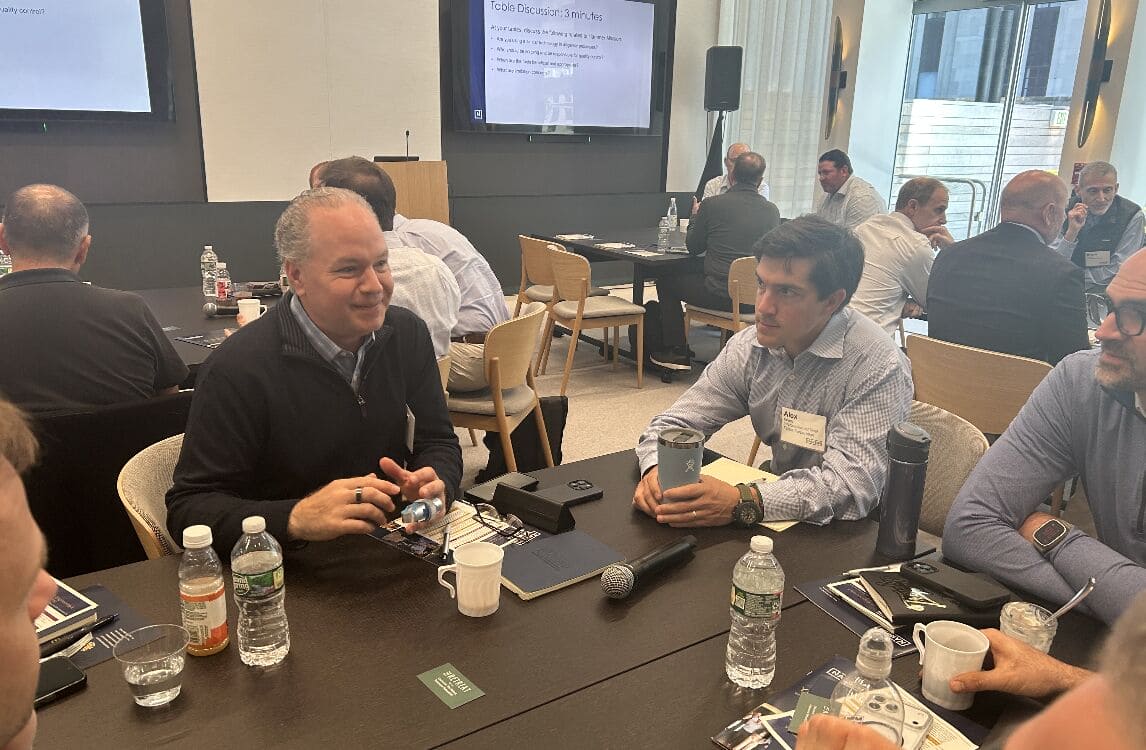
The technologies also raised practical questions about cost, quality control and appropriate use. Discussions repeatedly returned to whether a particular application makes sense for the asset and strategy, rather than whether the technology itself is impressive. Who should scope the work? Who owns quality control? When is each application appropriate? Where do its limitations lie?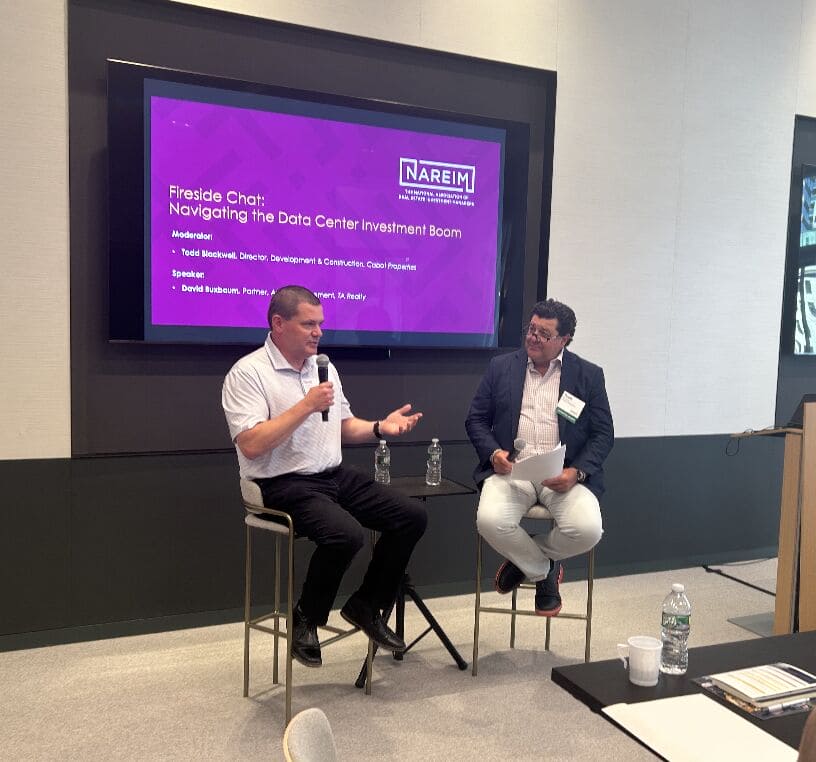
Data ownership emerged as another concern.
“For 30 grand, do you own the data?”
As vendors evolve or consolidate, managers want the ability to retain information created during diligence rather than leave valuable building intelligence trapped within a platform.
One example discussed during the meeting allows the owner to download the resulting data and retain it on its own servers.
When Hidden Conditions Become Capital Risks
Better diligence matters because some of the most expensive building problems are difficult to see. Water intrusion, failed sealants, deteriorated materials and improper installation can remain concealed long after construction.
By the time visible symptoms appear, a localized concern may have become a substantial capital project. The financial implications extend well beyond repair costs.
Envelope conditions can affect operations, energy use, leasing, tenant experience and liability, making the exterior assembly an asset-management issue as much as an engineering concern.
For diligence teams, that means paying attention to clues that may initially appear unrelated. Work-order histories, temporary patches, fogged windows, recurring leaks, flashing conditions and prior repairs can all help build a fuller picture.
Visual inspection still has limits, particularly on newer buildings where defective construction may not yet have produced symptoms. Targeted invasive testing can help, but sellers may restrict it.
When physical investigation is limited, construction documentation becomes more important. Drawings, submittals, testing records and construction photographs can provide evidence about how assemblies were designed and built.
Technology can supplement that process. Drone inspections can document difficult-to-access façades, while AI-assisted analysis can identify and quantify conditions across large areas. Repeat surveys also create the opportunity to compare deterioration over time.
Power Changes the Data Center Equation
Data centers bring many of these themes together at a much larger scale.
The critical constraint is increasingly not land, but access to power. Large proposed loads are forcing utilities to reconsider how projects enter their queues, how capacity is reserved and what developers must demonstrate before infrastructure commitments are made.
That changes the value equation for real estate. A site with credible access to transmission, generation and fiber can carry significantly different development potential from otherwise comparable land.
 It also introduces risks that traditional real estate underwriting may not fully capture. Equipment lead times, utility commitments, cooling strategies, changing server technology and community concerns around water and energy all affect feasibility.
The discussion also challenged the assumption that rapid technological change automatically makes the real estate obsolete. Servers may change quickly, but scarce power access, connectivity and supporting infrastructure can have a much longer useful life.
To access the full 2026 Architecture, Engineering & Development Meeting takeaways and meeting resources, click here to login to the Info Hub.